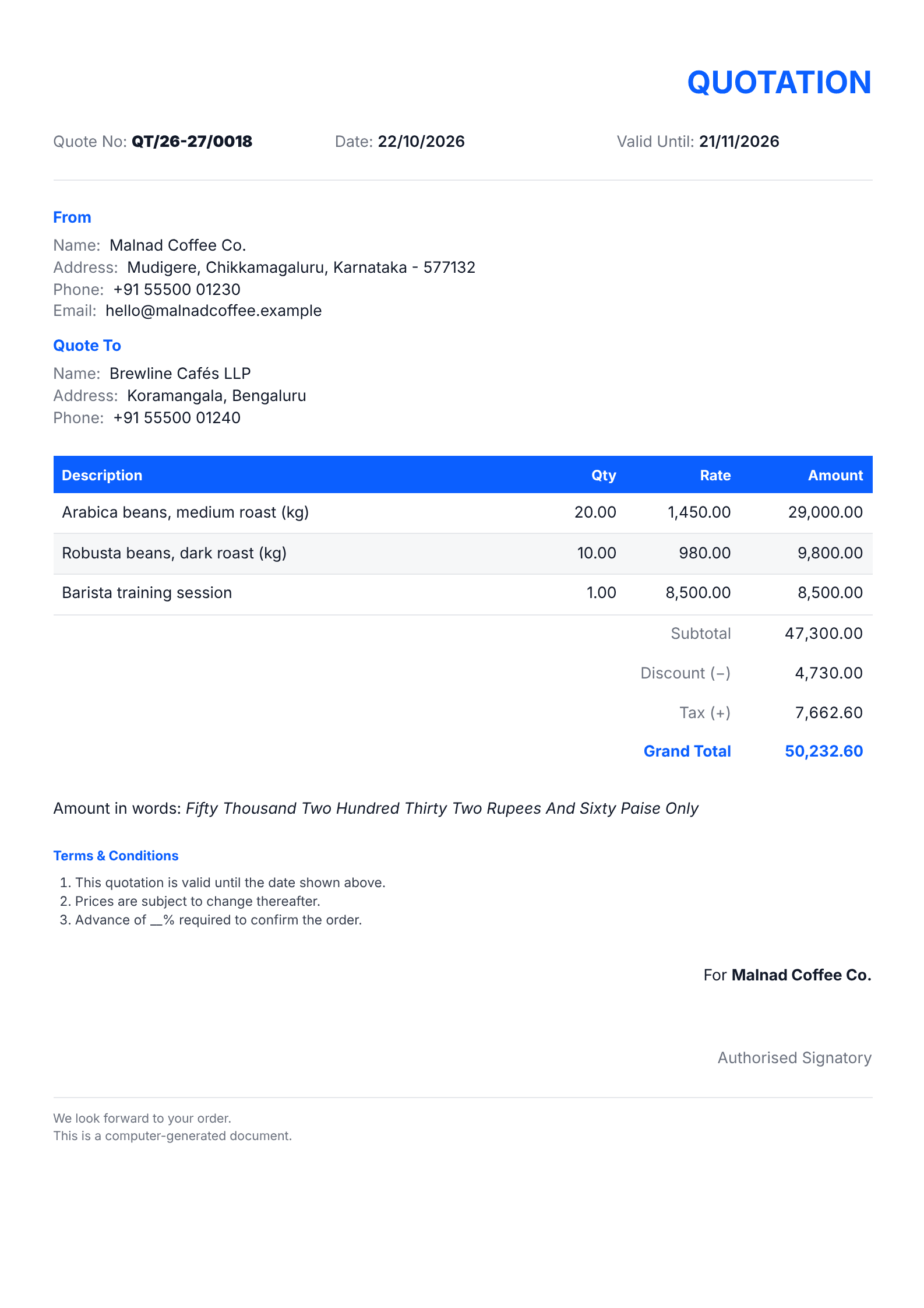
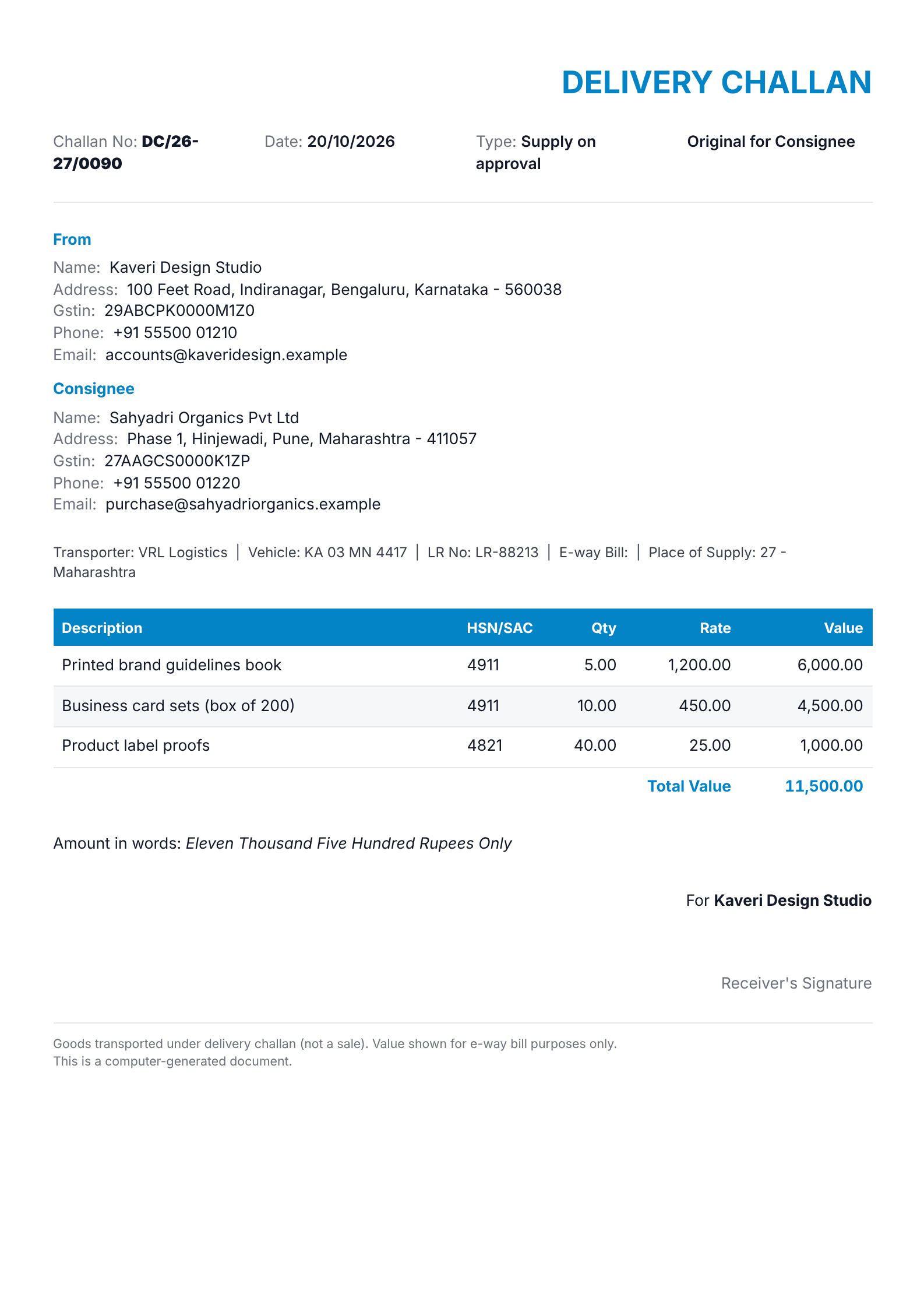
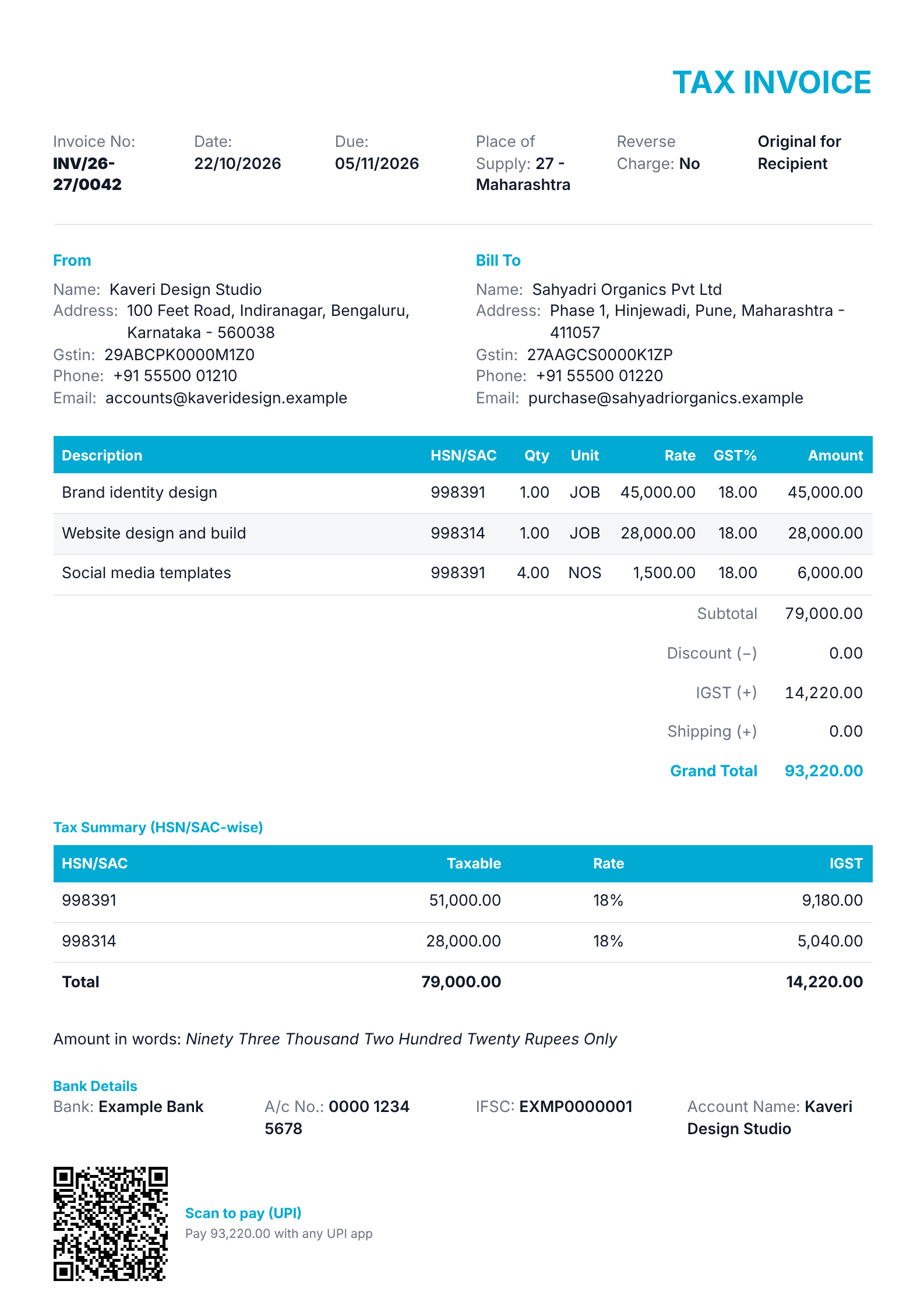
Purchase orders your suppliers can’t misread.
Items, rates, tax, delivery date and terms on one clear page, in your own layout.
No sign-up needed · Free PDF · No card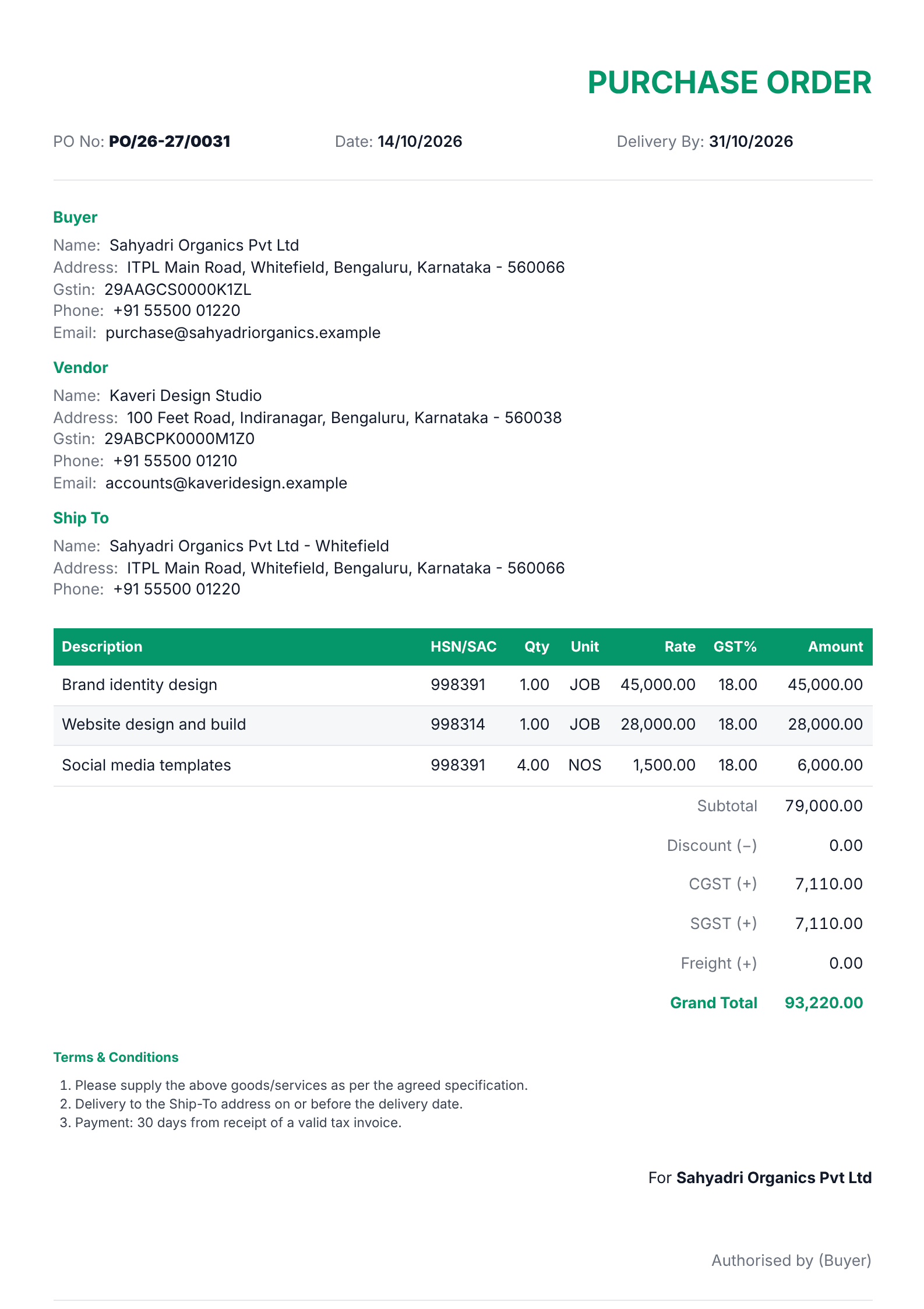
What is a purchase order?
A purchase order (PO) is a buyer’s written order to a supplier, listing what they want to buy, in what quantity, at what price and when it should be delivered.
Once the supplier accepts it, the PO usually forms the basis of the contract, so payment, delivery and warranty terms belong on it. It isn’t a tax document: GST is charged on the supplier’s invoice. Keeping the PO number lets you check the supplier’s invoice and the goods you received against what you ordered, often called a three-way match.
When you need one
- You buy from a supplier for the first time
- Spending needs approval before you order
- You want delivery dates and terms in writing
- Your accounts team matches invoices to orders
The purchase order comes from the buyer. The seller’s confirmation of it is a sales order.
General guidance, not legal or tax advice. Rules change, so check what applies to your business with your accountant.
Everything a purchase order needs.
So the supplier’s invoice matches what you ordered.
- PO number and dateFrom your own numbering series.
- Supplier and ship-toWhere to bill and where to deliver.
- Items, rates and taxWith HSN and GST, so totals match the invoice.
- Delivery dateAnd the place of delivery.
- Payment and delivery termsFrom your saved terms.
- Authorised signatoryName, title and signature.
Three steps, about a minute.
- Fill in the detailsYour business fills in from your profile. Pick a saved customer, then add your items.
- Make it yoursChange colours and fonts, add fields, hide what you don’t print, or use your own letterhead on Pro.
- Download or sendGet the PDF, or share a link with your supplier.