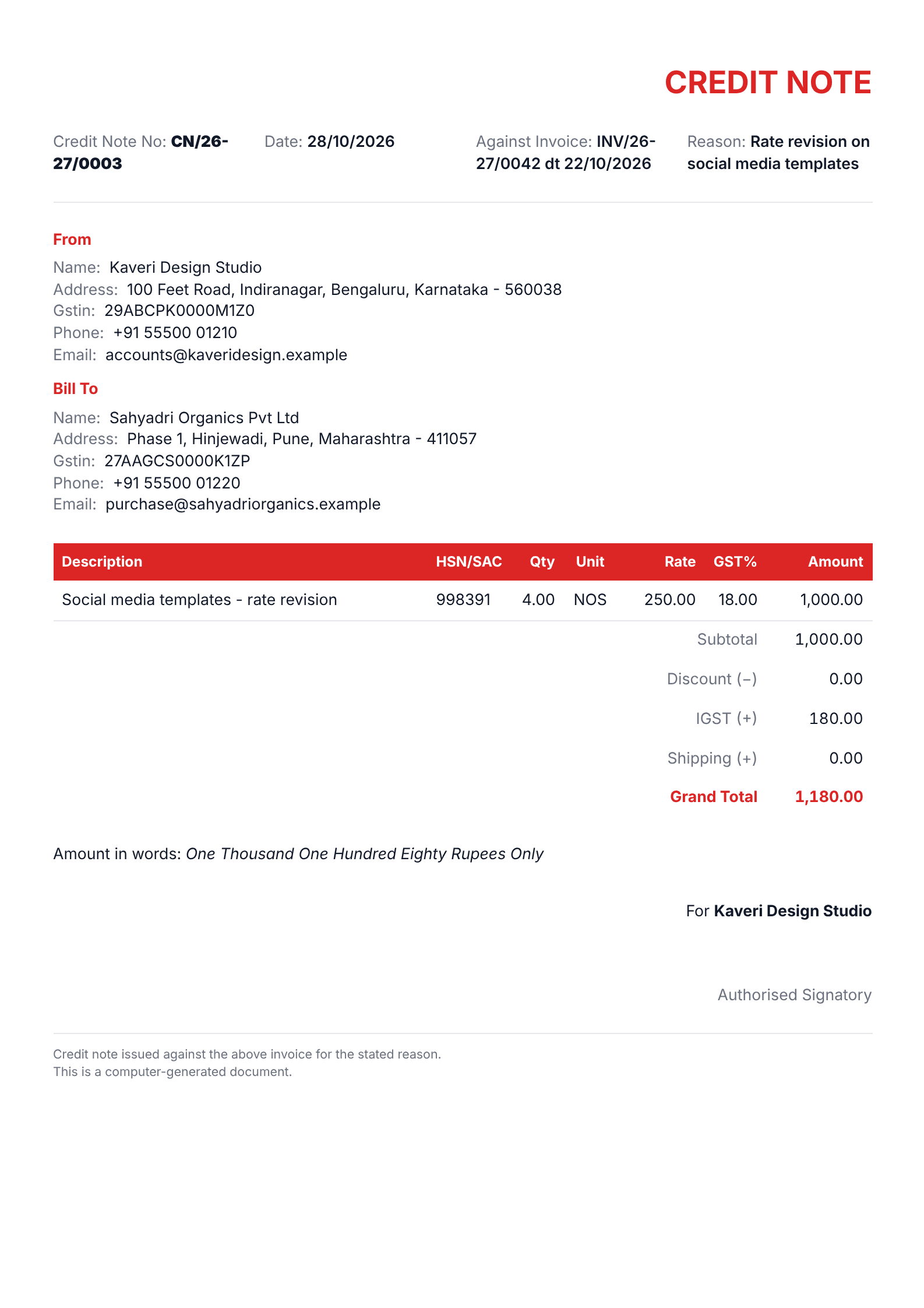
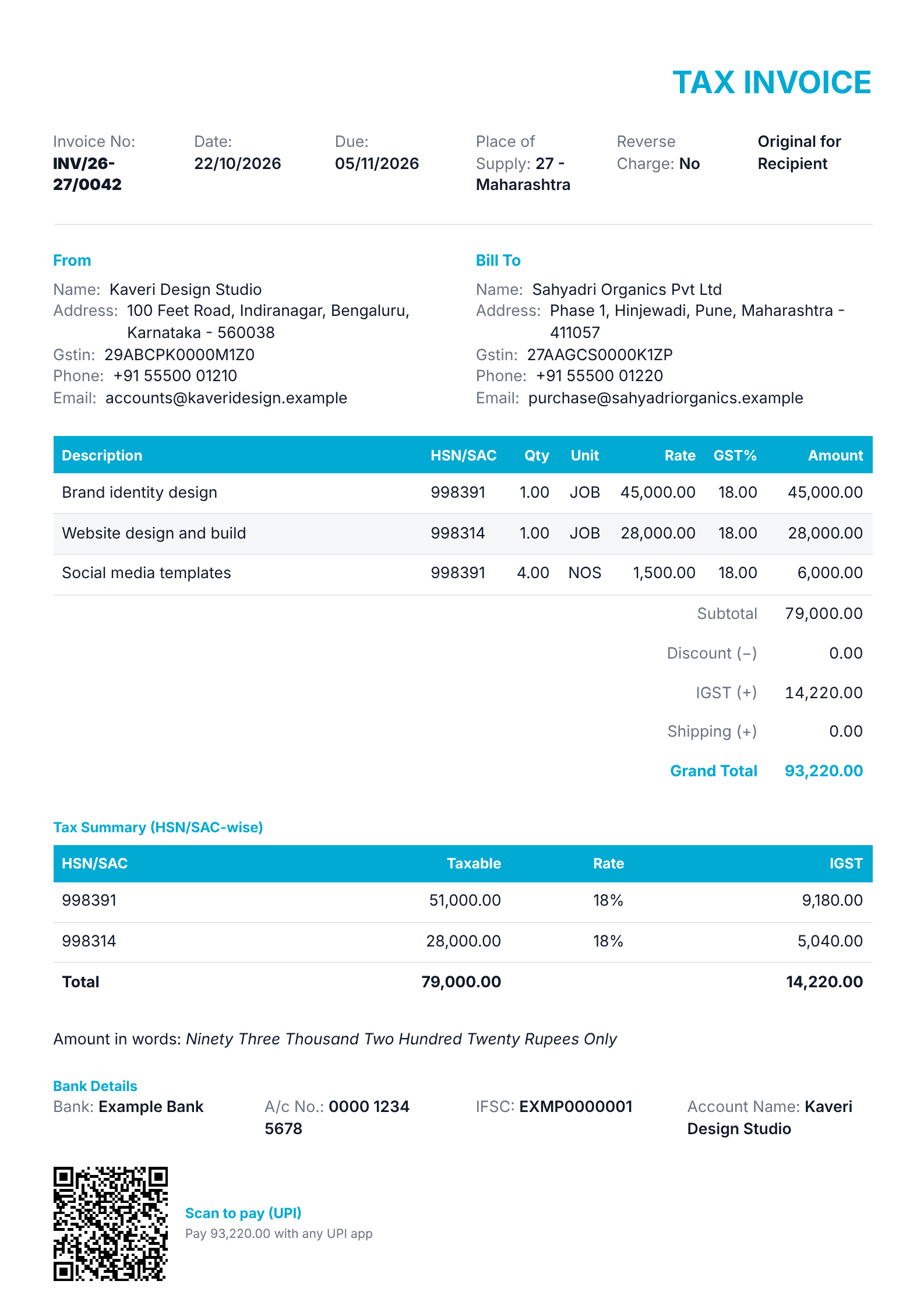
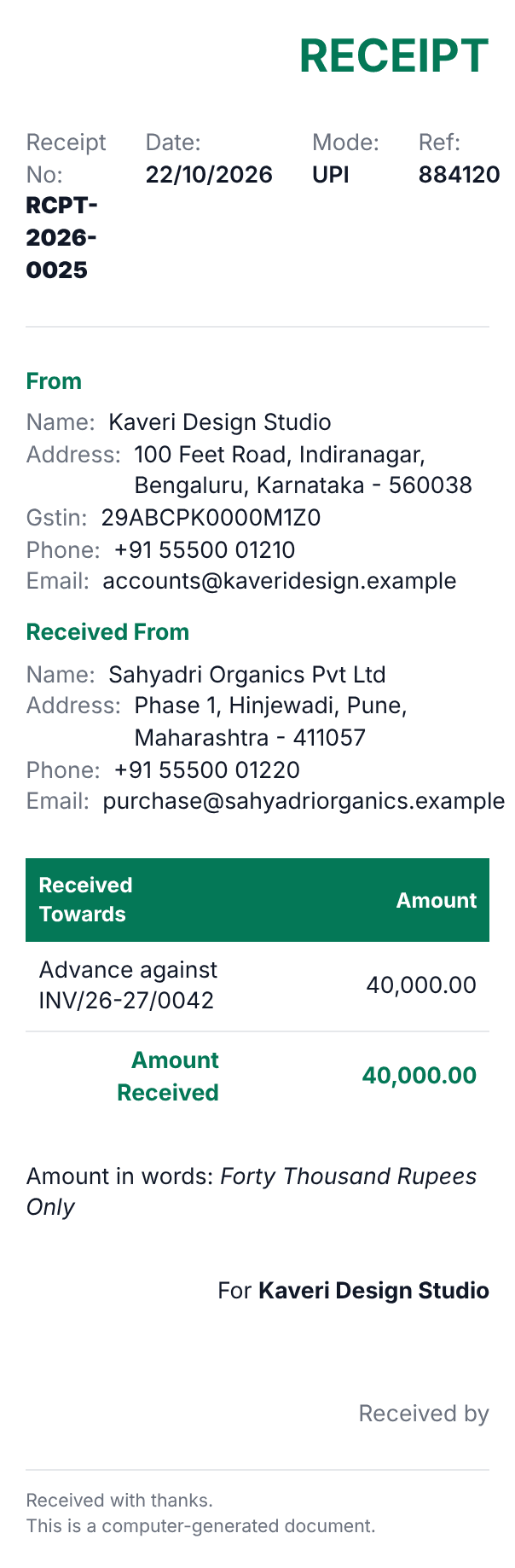
Debit notes that raise an invoice the right way.
Charge more after the invoice: a price increase, extra quantity or tax that was short. The original invoice prints on the note.
No sign-up needed · Free PDF · No card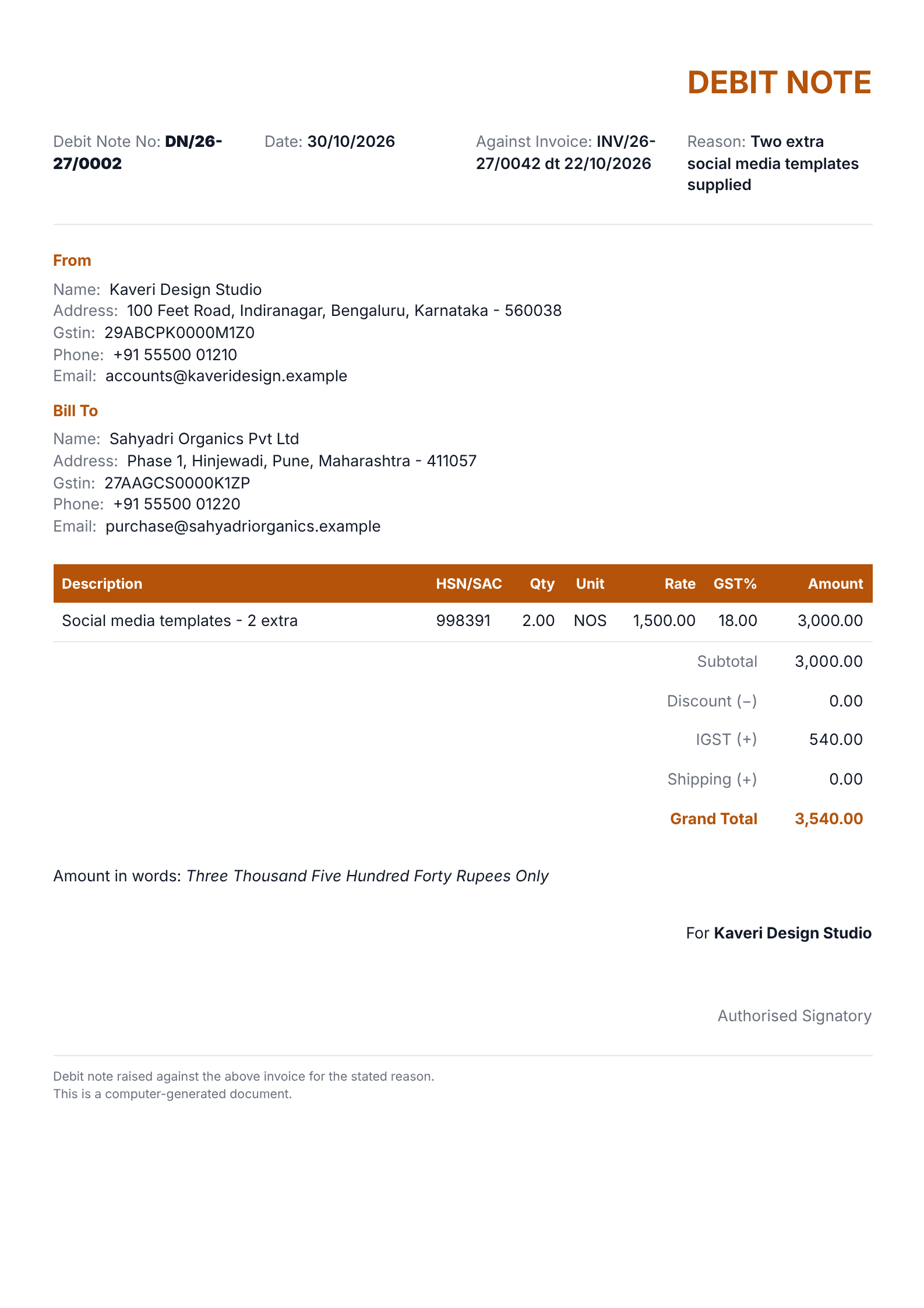
What is a debit note under GST?
A debit note is issued by a supplier to increase the value or the tax of an invoice already issued.
Under Section 34(3) of the CGST Act, you issue one when the taxable value or tax on the original invoice was less than it should have been, for example after a price revision, extra quantity or tax charged at too low a rate. It quotes the original invoice and is reported in GSTR-1 for the period in which you issue it.
When you need one
- The agreed price went up after you invoiced
- You supplied more than the invoice shows
- You charged GST at too low a rate
- You missed a charge, such as freight
In everyday business, buyers also send a ‘debit note’ to a supplier when returning goods. That is a commercial document, not the GST one.
General guidance, not legal or tax advice. Rules change, so check what applies to your business with your accountant.
Everything a debit note needs.
Linked to the original invoice, with the extra tax worked out.
- Debit note numberIn its own series.
- Original invoiceIts number and date.
- ReasonPrice change, extra quantity or short tax.
- Extra items and taxWith the CGST and SGST, or IGST.
- Amount in wordsIn lakh and crore, or million.
- Tally exportAs a debit note voucher, on Pro.
Three steps, about a minute.
- Fill in the detailsYour business fills in from your profile. Pick a saved customer, then add your items.
- Make it yoursChange colours and fonts, add fields, hide what you don’t print, or use your own letterhead on Pro.
- Download or sendGet the PDF, or share a link your customer can open on any phone.